|

| Home | Crystal | jmol | jPOWD | Chem | X Ray | Dana | Strunz | Properties | A to Z | Images | Share | News | Help | About |
Gladstone-Dale Relationship
|
The relationship between chemical composition, density, and refractive index was proposed as a means of examining gasses and solutions (Gladstone, Dale(1863), Phil. Trans, 153, 317). This relationship is as follows:
The practice of using the Gladstone-Dale relationship to minerals only gives an approximation because of the effects that different crystal systems have on the anisotropy of the crystal lattice and the resultant values of n (index of refraction). Compatibility IndexMandarino, in his review of the Gladstone-Dale relationship in minerals (Can, Min, (1981), Vol 19, pp 441-450) proposed the concept of the Compatibility Index in comparing the physical and optical properties of minerals. This compatibility index is a required calculation for approval as a new mineral species (see IMA guidelines). The compatibility index (CI) is defined as follows:
The internal consistency of the Compatibility Index is defined by the following Table of values which describe the "Goodness" of the mineral data.
SummaryThe calculation of the Compatibility Index is based on the values of the chemical composition, index of refraction, and calculated or observed density for each mineral species and is included in the optical section of the mineral species description. The following graph illustrates the application of Mandarino's Compatibility Index (CI) to the minerals in this database: 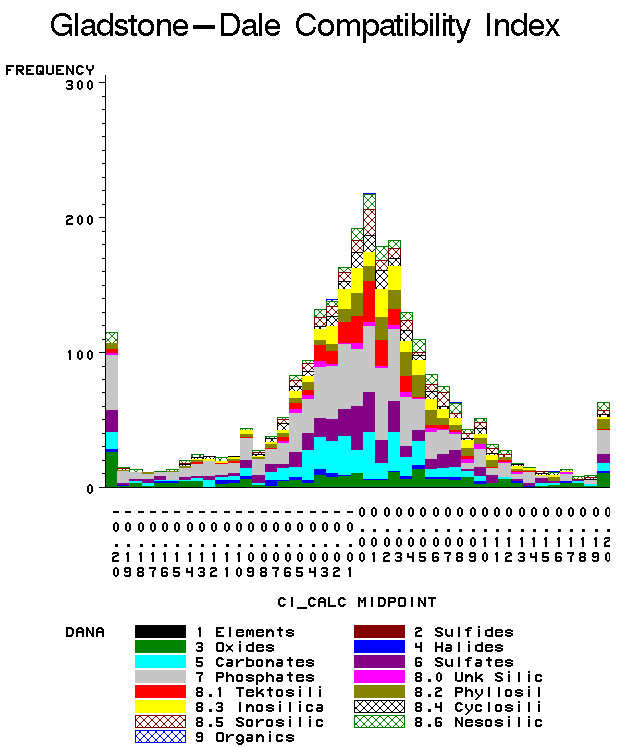 Of all the minerals (2,679) where the CI is applicable (excluding elements, sulfides, halides, and bad oxide analysis), there are 2,180 minerals with a CI of 0.079 or better. Conversely, 18.6% of of the 2,679 minerals have a CI rating of "Poor". For Further Information on Gladstone-DaleSearch the Mineralogy DatabaseSearch the Web |